

Rome SDS Katana AW PHASE 25/26
We ship the product from the Helsinki store warehouse.
We offer free shipping on all purchases over 99 euros.
Product information: Rome SDS Katana AW PHASE 25/26
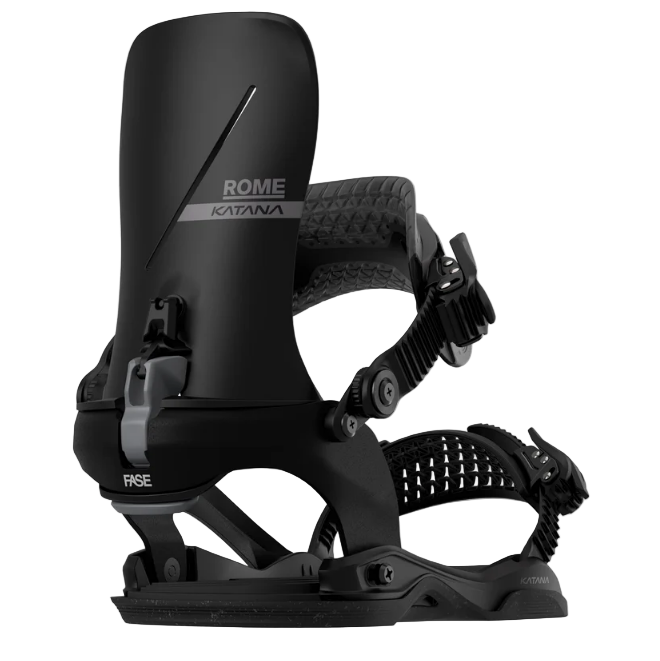
The Katana AW FASE® is the next chapter of the most storied binding in snowboarding. Built on the performance-driven, hyper-adjustable Katana AW platform, the FASE® Fast Entry System optimizes the Katana's legendary performance and Lightweight construction, making it faster and easier to strap-in and out than ever before.
Manufacturer's introduction: Rome SDS
Rome SDS
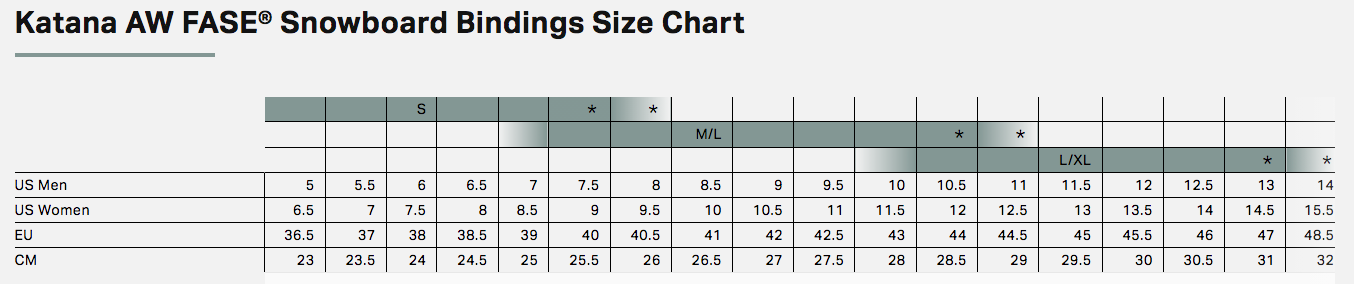
Size chart
Rome SDS – Size Guides
General snowboard size selection (Rome EU): How to Choose Your Snowboard Size
Recommendation: weight is the primary consideration, boot size often determines the need for a Wide version. For splitboards, size is usually based on weight and intended use (climbing/powder).
Men – Snowboards (Recommendation Table)
| Rider weight (kg) | Recommended length (cm) | Use | Width / Wide | Split |
|---|---|---|---|---|
| 45–60 | 147–153 | Park / freestyle / lighter all-mountain | Wide usually if US 10.5+ (EU 44.5+) | Less common in this weight class, depending on the model |
| 60–75 | 152–157 | All-mountain / resort | Wide often if US 10–11+ | Split models often 153–158 |
| 75–90 | 156–162 | All-mountain / freeride | Wide often if US 10.5–12+ | Split models often 158–162 |
| 90+ | 160–166+ | Freeride / stability / faster speed | Wide often necessary (depends on waist width) | Split models often 162–165+ |
It is always a good idea to display model-specific lengths and technical dimensions (waist width, etc.) on the product page.
Women – Snowboards (recommendation table)
| Rider weight (kg) | Recommended length (cm) | Use | Width / Wide | Split |
|---|---|---|---|---|
| 35–50 | 140–146 | Park / easy all-mountain | Wide only if big boot (less common) | Limited, depending on model |
| 50–65 | 144–150 | All-mountain / resort | If necessary, if toe/heel drag | Split models often 145–152 |
| 65–80+ | 149–154+ | All-mountain / freeride | Wide useful in some models | Split models often 152–156+ |
Youth & Children – Snowboards (recommendation table)
| Rider weight (kg) | Recommended length (cm) | Boot size (guide) | Attention |
|---|---|---|---|
| 18–28 | 95–105 | Kids (small) | Easy to turn, playful flex |
| 25–35 | 110–120 | Kids / Youth | Growth room is important: always check the compatibility of the binding and boot |
| 30–45 | 125–135 | Youth | An all-mountain-focused size often works best |
| 40–60 | 137–145+ | Youth / small adult sizes | If necessary, transition to adult boards |
Rome SDS – Snowboard Bindings
The Size Chart can be found under the “Size Chart” section on the Rome SDS product pages. The links below take you directly to the Rome EU product pages, where the Size Chart is included.
Men – Ties (models + Size Chart links)
| Quid | Categories | Sizes (depending on product) | Rome SDS Size Chart |
|---|---|---|---|
| Katana AW | All-mountain / precise adjustment | S, M/L, L/XL | Open Size Chart |
| Trace AW | All-mountain / lighter | S, M/L, L/XL | Open Size Chart |
| DOD (2425) | All-mountain / freeride | M/L, L/XL (varies) | Open Size Chart |
| Vice (2425) | All-mountain / freestyle | S, M/L, L/XL (varies) | Open Size Chart |
Women – Ties (models + Size Chart links)
| Quid | Categories | Sizes (depending on product) | Rome SDS Size Chart |
|---|---|---|---|
| Brass FW | All-mountain / responsive | S, M/L | Open Size Chart |
If you also have other Rome women's ties in your range (e.g. Brass AW/HW), I recommend adding them to this same format by linking to the EU product page for that model.
Rome SDS Katana AW PHASE 25/26 from YouTube
The Katana AW FASE® is the next chapter of the most storied binding in snowboarding. Built on the performance-driven, hyper-adjustable Katana AW platform, the FASE® Fast Entry System optimizes the Katana's legendary performance and Lightweight construction, making it faster and easier to strap-in and out than ever before.
Rome SDS
Rome SDS – Size Guides
General snowboard size selection (Rome EU): How to Choose Your Snowboard Size
Recommendation: weight is the primary consideration, boot size often determines the need for a Wide version. For splitboards, size is usually based on weight and intended use (climbing/powder).
Men – Snowboards (Recommendation Table)
| Rider weight (kg) | Recommended length (cm) | Use | Width / Wide | Split |
|---|---|---|---|---|
| 45–60 | 147–153 | Park / freestyle / lighter all-mountain | Wide usually if US 10.5+ (EU 44.5+) | Less common in this weight class, depending on the model |
| 60–75 | 152–157 | All-mountain / resort | Wide often if US 10–11+ | Split models often 153–158 |
| 75–90 | 156–162 | All-mountain / freeride | Wide often if US 10.5–12+ | Split models often 158–162 |
| 90+ | 160–166+ | Freeride / stability / faster speed | Wide often necessary (depends on waist width) | Split models often 162–165+ |
It is always a good idea to display model-specific lengths and technical dimensions (waist width, etc.) on the product page.
Women – Snowboards (recommendation table)
| Rider weight (kg) | Recommended length (cm) | Use | Width / Wide | Split |
|---|---|---|---|---|
| 35–50 | 140–146 | Park / easy all-mountain | Wide only if big boot (less common) | Limited, depending on model |
| 50–65 | 144–150 | All-mountain / resort | If necessary, if toe/heel drag | Split models often 145–152 |
| 65–80+ | 149–154+ | All-mountain / freeride | Wide useful in some models | Split models often 152–156+ |
Youth & Children – Snowboards (recommendation table)
| Rider weight (kg) | Recommended length (cm) | Boot size (guide) | Attention |
|---|---|---|---|
| 18–28 | 95–105 | Kids (small) | Easy to turn, playful flex |
| 25–35 | 110–120 | Kids / Youth | Growth room is important: always check the compatibility of the binding and boot |
| 30–45 | 125–135 | Youth | An all-mountain-focused size often works best |
| 40–60 | 137–145+ | Youth / small adult sizes | If necessary, transition to adult boards |
Rome SDS – Snowboard Bindings
The Size Chart can be found under the “Size Chart” section on the Rome SDS product pages. The links below take you directly to the Rome EU product pages, where the Size Chart is included.
Men – Ties (models + Size Chart links)
| Quid | Categories | Sizes (depending on product) | Rome SDS Size Chart |
|---|---|---|---|
| Katana AW | All-mountain / precise adjustment | S, M/L, L/XL | Open Size Chart |
| Trace AW | All-mountain / lighter | S, M/L, L/XL | Open Size Chart |
| DOD (2425) | All-mountain / freeride | M/L, L/XL (varies) | Open Size Chart |
| Vice (2425) | All-mountain / freestyle | S, M/L, L/XL (varies) | Open Size Chart |
Women – Ties (models + Size Chart links)
| Quid | Categories | Sizes (depending on product) | Rome SDS Size Chart |
|---|---|---|---|
| Brass FW | All-mountain / responsive | S, M/L | Open Size Chart |
If you also have other Rome women's ties in your range (e.g. Brass AW/HW), I recommend adding them to this same format by linking to the EU product page for that model.
What should you consider when choosing snowboard bindings?
A few questions to consider before buying snowboard bindings
What is the difference between FASE bandages and traditional strap bandages?
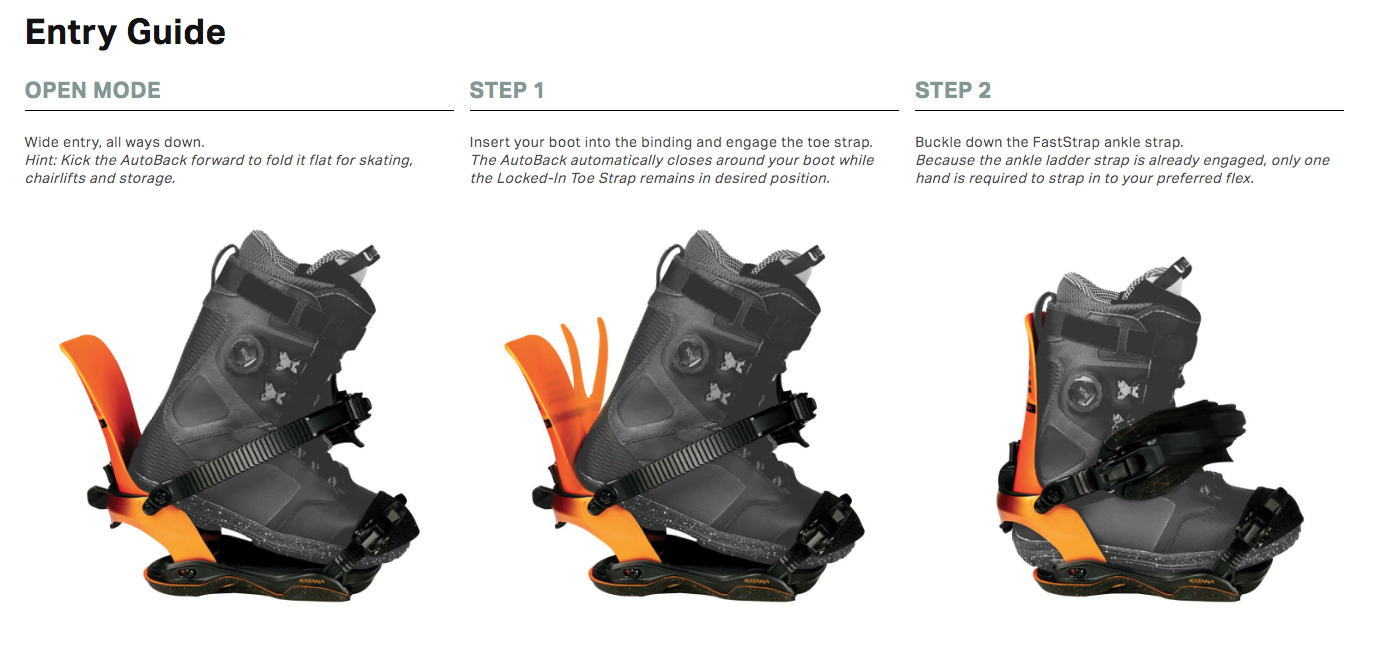
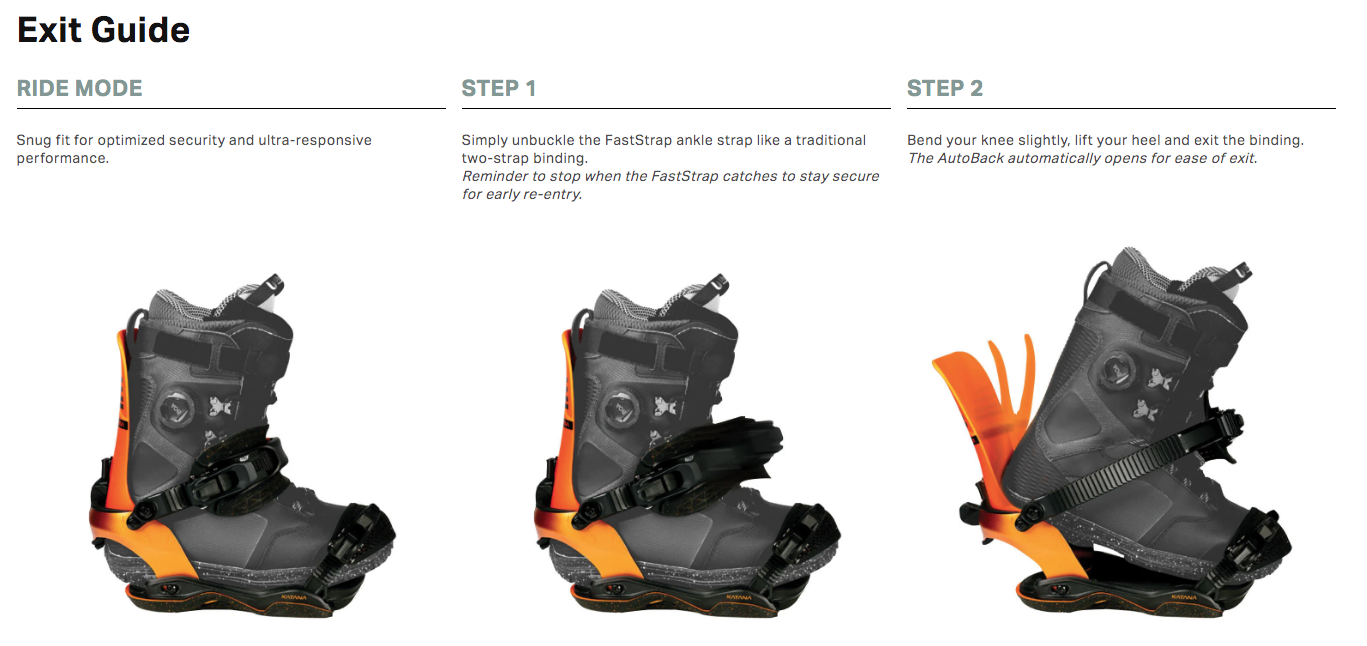
FASE bindings still work with the two-strap logic, but the fastening is faster and easier. The AutoBack highback opens and closes automatically, and the ankle and toe straps are quickly put in place. Traditional strap bindings require manual tightening every time, while FASE speeds up the process without the Step-On type locking system.
Do Step On bindings fit all snowboard boots?
Will not fit. Step On bindings require Step On compatible boots because the lock works with special attachment points in the heel and toe. Regular snowboard boots will not lock into Step On bindings, and Step On boots cannot be used with regular strap bindings.
Is the FASE system compatible with all snowboard boots?
Yes. FASE is based on standard straps, so it works with virtually all standard sized snowboard boots. This is one of the advantages of the FASE system compared to the Step On system, which is boot specific.
What is the Burton Channel System?
The Channel is a long, slot-like mounting solution developed by Burton that allows for infinitely adjustable binding position. Most bindings on the market today are compatible with the Channel via an ICS plate. Burton's own EST bindings are designed specifically for the Channel, but they do not fit standard 4x4 or 2x4 boards.
Is there a difference between toe straps and strap bindings?
Yes. There are two main types of toe straps: “over-the-toe” and “cap strap.” The cap strap is the most modern and fits more tightly over the toe of the boot, improving power transfer and comfort. Rome SDS, Burton, Union, and many other manufacturers now use the cap strap solution on almost all of their top bindings.
What bandage stiffness is best for me?
Medium-flex bindings are suitable for most skiers, especially on slopes and all-mountain use. Softer bindings are suitable for beginners and park use, while stiffer bindings are best for carving, fast descents and freeride. FASE and Step On bindings are available in all stiffness levels, so you should choose based on your own skiing style.
Do all bindings fit all boards?
Most bindings fit all boards, as long as:
- Your binding is the right size for your shoe.
- The board mounting system is compatible (4x4, 2x4, Channel)
Most manufacturers use a 2x4 pattern, which is universally compatible.